Prevention Priority
Opioids
Population of Focus
Law enforcement
Agent of Change
Community leadership, law enforcement leadership
Intervening Variable
Enforcement
Summary
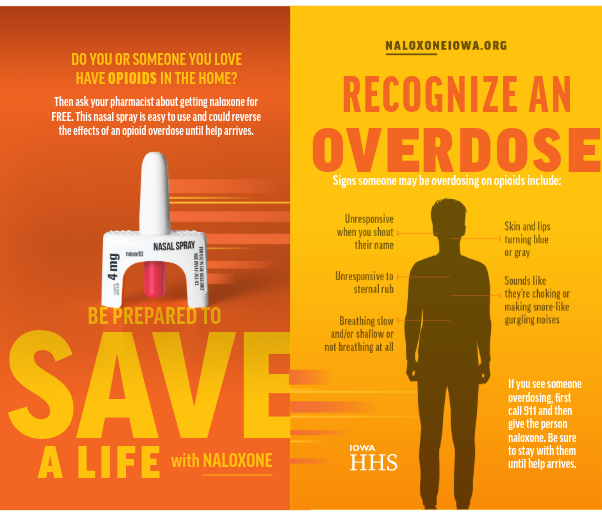
Law enforcement officers, who are often the first responders on the scene of an opioid overdose, can play a critical role in preventing overdose fatalities through the deployment of naloxone. Although not mandated, it is strongly encouraged to have in-house policies and protocols in place regarding the appropriate use of naloxone which include steps to be taken upon administration; follow-up care protocols; proper disposal of used, expired, or adulterated units; and proper reporting procedures. There have been challenges with law enforcement carrying naloxone due to storage concerns, liability concerns, worries about being equipped to use the medication, carrying for self-protection, not understanding the cycle of addiction, etc.
These procedures should be drafted in consultation with the governing laws of the jurisdiction and any applicable collective bargaining units. If applicable, policies should integrate the provisions of Iowa’s Good Samaritan laws, as well as the department’s policy on information gathering, searches, arrests, and other activities at the scene of an overdose. Any triage plans developed with EMS and fire agencies can also be reflected in the department’s Standard Operating Procedures (SOP).
Core Components
Dosage/Frequency
Dosage and frequency will be decided dependent on the type of change the community focuses on. This dosage will need to be reviewed and approved by the Agency. Contact the Agency Project Director/Coordinator for additional grant requirements about this documentation.
Required Key Steps
All policies developed or strengthened through this strategy must be formally written, signed by the community leadership and then provided to the Agency Project Director/Coordinator as documentation.
In collaboration with the coalition and community partners, discuss the following:
- Review which law enforcement organizations have a Standard Operating Procedure (SOP) for opioid response including naloxone utilization.
- Meet with law enforcement in each law enforcement agency:
- For those with no SOP, identify their support of the strategy.
- For those with a SOP, identify how the policy is working, if there are gaps, resource needs, etc.
- Discuss benefits and barriers of establishing a SOP for opioid response.
- Consider how the Agency funding opportunity may assist with those barriers.
- Contact the Agency Project Director/Coordinator for needs related to naloxone.
- Work with law enforcement staff to create an SOP for opioid response utilizing the resources listed below in the “Implementation Resources” section.
- Utilize the 8 P’s for policy change efforts.
- Review supports needed for successful SOP implementation including training needs, tracking form creation, etc.
- Contact the Agency Project Director/Coordinator for any requests outside the scope of the Agency funded project.
- Once a SOP has been approved by the law enforcement agency:
- Create a plan that will ensure ongoing monitoring of use of the SOP.
- Continue to serve as a resource to the law enforcement agency.
- Consider the community’s support for law enforcement effort. If support is low, identify ways to increase support through the coalition.
Training
Law Enforcement Training from Washington State
Implementation Resources
Building Successful Partnerships between Law Enforcement and Public Health Agencies to Address Opioids Use
Iowa HHS Overdose Information
Iowa’s Naloxone Toolkit for Law Enforcement
SAMHSA Opioid Overdose Prevention Toolkit
Law Enforcement Training from Washington State
References
Davis, C. S., Carr, D., Southwell, J. K., & Beletsky, L. (2015). Engaging law enforcement in overdose reversal initiatives: Authorization and liability for naloxone administration. Am J Public Health, 105(8), 1530–1537. https://doi.org/10.2105/AJPH.2015.302638
Davis, C. S., Ruiz, S., Glynn, P., Picariello, G., & Walley, A. Y. (2014). Expanded access to naloxone among firefighters, police officers, and emergency medical technicians in Massachusetts. Am J Public Health, 104(8), e7–e9. https://doi.org/10.2105/AJPH.2014.302062
Wagner, K. D., Bovet, L. J., Haynes, B., Joshua, A., & Davidson, P. J. (2016). Training law enforcement to respond to opioid overdose with naloxone: Impact on knowledge, attitudes, and interactions with community members. Drug and alcohol dependence, 165, 22–28. https://doi.org/10.1016/j.drugalcdep.2016.05.008